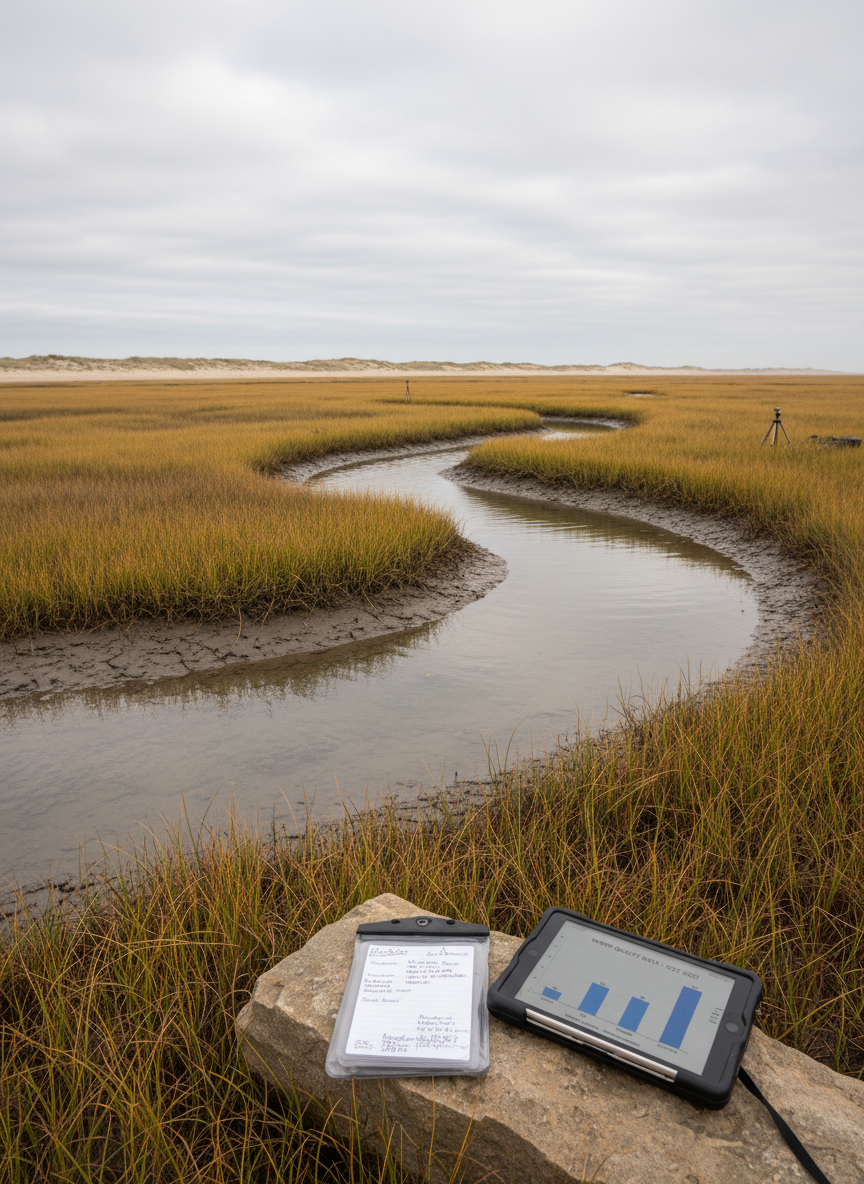
A serene photographic scene of a coastal salt marsh at low tide, used as a case study for environmental science, with intricate channels of shallow water winding between clumps of golden-green grasses. In the foreground, a small, open waterproof field notebook rests on a flat rock, next to a neatly placed digital tablet showing a chart of water quality data. Overcast, diffused light from a cloudy sky softens all shadows and enriches the subtle colors of the landscape. Captured from a low, slightly angled perspective, the composition leads the eye along the sinuous water channels toward a distant line of hazy dunes. The mood is contemplative and scientific, with a realistic, documentary photographic style that emphasizes texture, detail, and the fragile beauty of coastal ecosystems.

Events & Resources

This section gathers upcoming events, deadlines, and opportunities relevant to Fordham environmental studies students and faculty, with notes on submission processes and eligibility.

About

Research Guidelines

Provides core references, databases, and citation tips to support students’ scholarly writing and project work.
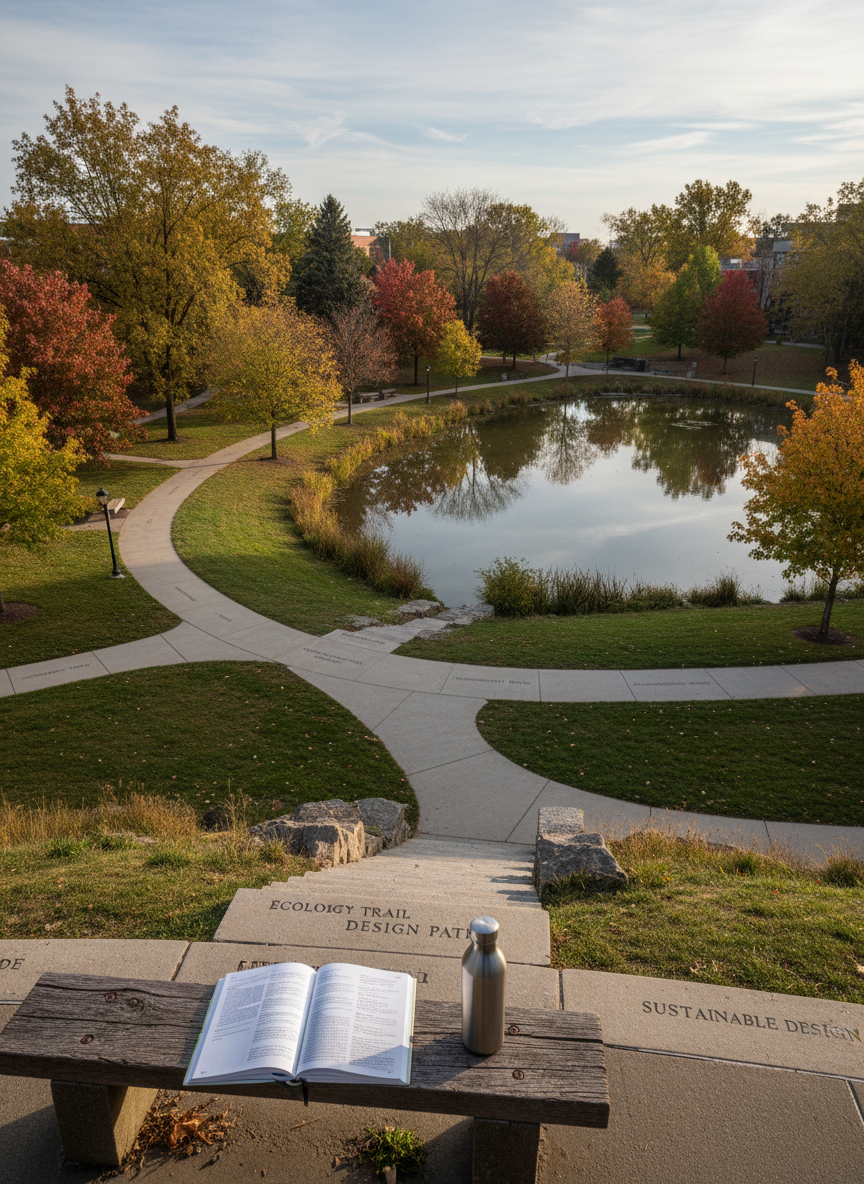

A wide aerial photographic view of a lush urban campus green space representing environmental studies, with vibrant trees in early autumn colors surrounding a small reflective pond. Neatly labeled stone pathways form subtle patterns across the grass, and an open notebook with printed research articles lies on a wooden bench, pages weighed down by a reusable stainless steel water bottle. Soft late-afternoon light filters through thin clouds, casting gentle shadows from the trees and creating a calm, studious atmosphere. Captured with sharp focus throughout from a slightly elevated angle, the composition uses the rule of thirds to balance the pond, pathways, and study materials. The mood is thoughtful and academic, with clean, realistic photographic style suited to a university environmental studies blog.
A close-up photographic view of a tidy wooden desk arranged for environmental research, featuring a laptop displaying a colorful world map of climate zones beside a thick, well-worn environmental studies textbook with sticky notes protruding from its pages. Around them sit neatly stacked printed journal articles, a recycled cardboard notebook, and a small glass terrarium housing bright green moss and a tiny fern. Soft, indirect daylight from an unseen window creates gentle reflections on the laptop screen and subtle shadows along the wood grain. The composition is shot at eye level with a shallow depth of field, keeping the central research materials in crisp focus while the background fades into a soft blur of shelves filled with organized binders. The atmosphere is focused, academic, and inviting, in a clean photographic realism style.
A serene photographic scene of a coastal salt marsh at low tide, used as a case study for environmental science, with intricate channels of shallow water winding between clumps of golden-green grasses. In the foreground, a small, open waterproof field notebook rests on a flat rock, next to a neatly placed digital tablet showing a chart of water quality data. Overcast, diffused light from a cloudy sky softens all shadows and enriches the subtle colors of the landscape. Captured from a low, slightly angled perspective, the composition leads the eye along the sinuous water channels toward a distant line of hazy dunes. The mood is contemplative and scientific, with a realistic, documentary photographic style that emphasizes texture, detail, and the fragile beauty of coastal ecosystems.
A wide aerial photographic view of a lush urban campus green space representing environmental studies, with vibrant trees in early autumn colors surrounding a small reflective pond. Neatly labeled stone pathways form subtle patterns across the grass, and an open notebook with printed research articles lies on a wooden bench, pages weighed down by a reusable stainless steel water bottle. Soft late-afternoon light filters through thin clouds, casting gentle shadows from the trees and creating a calm, studious atmosphere. Captured with sharp focus throughout from a slightly elevated angle, the composition uses the rule of thirds to balance the pond, pathways, and study materials. The mood is thoughtful and academic, with clean, realistic photographic style suited to a university environmental studies blog.

Upcoming Climate Talks

A close-up photographic view of a tidy wooden desk arranged for environmental research, featuring a laptop displaying a colorful world map of climate zones beside a thick, well-worn environmental studies textbook with sticky notes protruding from its pages. Around them sit neatly stacked printed journal articles, a recycled cardboard notebook, and a small glass terrarium housing bright green moss and a tiny fern. Soft, indirect daylight from an unseen window creates gentle reflections on the laptop screen and subtle shadows along the wood grain. The composition is shot at eye level with a shallow depth of field, keeping the central research materials in crisp focus while the background fades into a soft blur of shelves filled with organized binders. The atmosphere is focused, academic, and inviting, in a clean photographic realism style.

Graduate Research Summit

Abstract submissions due March 15; conference sessions May 3–5; travel grants available for Fordham Environmental Studies students

A serene photographic scene of a coastal salt marsh at low tide, used as a case study for environmental science, with intricate channels of shallow water winding between clumps of golden-green grasses. In the foreground, a small, open waterproof field notebook rests on a flat rock, next to a neatly placed digital tablet showing a chart of water quality data. Overcast, diffused light from a cloudy sky softens all shadows and enriches the subtle colors of the landscape. Captured from a low, slightly angled perspective, the composition leads the eye along the sinuous water channels toward a distant line of hazy dunes. The mood is contemplative and scientific, with a realistic, documentary photographic style that emphasizes texture, detail, and the fragile beauty of coastal ecosystems.

Sustainability Dialogue 2024

Event scheduled for April 28, 2024, with panels on urban ecology, policy, and community engagement; RSVP by April 15

A wide aerial photographic view of a lush urban campus green space representing environmental studies, with vibrant trees in early autumn colors surrounding a small reflective pond. Neatly labeled stone pathways form subtle patterns across the grass, and an open notebook with printed research articles lies on a wooden bench, pages weighed down by a reusable stainless steel water bottle. Soft late-afternoon light filters through thin clouds, casting gentle shadows from the trees and creating a calm, studious atmosphere. Captured with sharp focus throughout from a slightly elevated angle, the composition uses the rule of thirds to balance the pond, pathways, and study materials. The mood is thoughtful and academic, with clean, realistic photographic style suited to a university environmental studies blog.

Environmental Justice Forum

Date: May 12, 2024; location: Fordham Lincoln Center campus; topics include climate policy, adaptation strategies.