Date: February 4th, 2026
While reading Chapters 18 and 19 of Living in the Environment, I began to question why environmental issues are so often separated into different categories. Air pollution and climate change are typically treated as distinct problems, yet these chapters make clear that they stem from many of the same behaviors — particularly fossil fuel combustion and industrialized patterns of consumption.¹
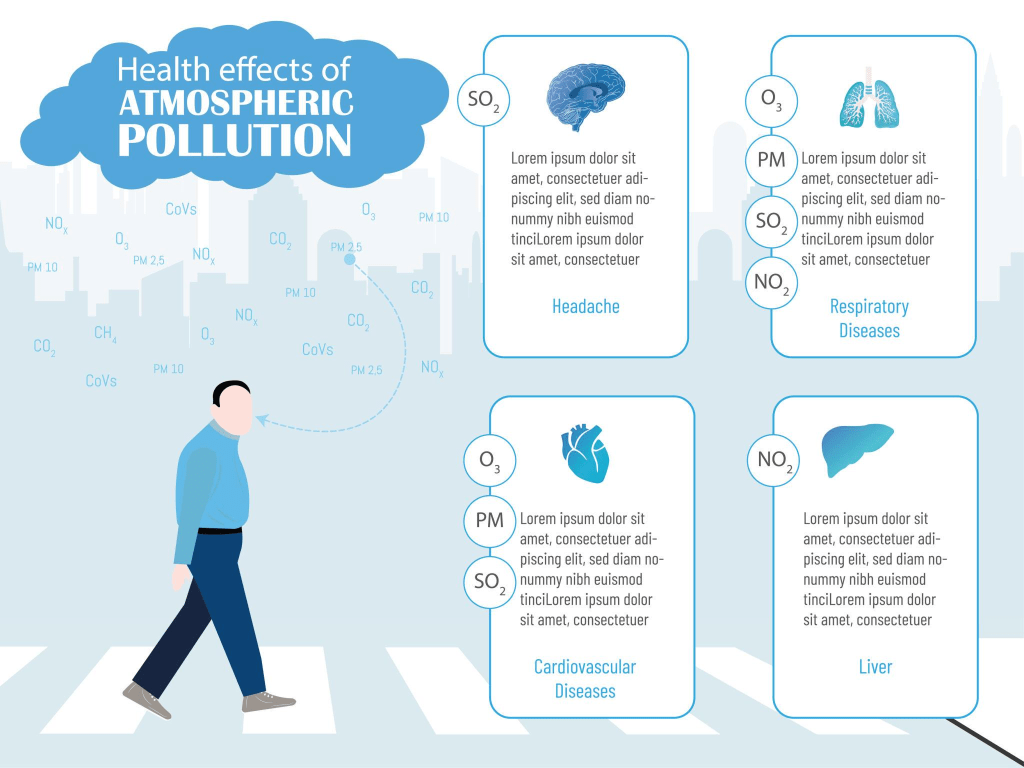
Chapter 18 made air pollution feel immediate and personal. It is not a distant ecological abstraction; it is something people inhale every day. The discussion of health impacts — asthma, cardiovascular disease, lung damage — reinforced how environmental harm translates directly into public health consequences.² What stood out most to me was the uneven distribution of these impacts. Children, the elderly, and low-income communities often face higher exposure levels, especially in areas near highways, industrial facilities, or power plants. The chapter also emphasizes that indoor air pollution remains a significant problem globally and domestically, yet it receives far less public attention than outdoor smog.³ That disconnect made me think about how visibility shapes urgency.
Chapter 19 shifts to climate change, and the scale expands dramatically. Instead of focusing on localized exposure, it describes systemic transformations — rising sea levels, changing precipitation patterns, more intense storms, and ecosystem disruptions.⁴ What stayed with me most was the argument that inaction is not neutral. Delaying mitigation efforts narrows future options and increases long-term risks.⁵ Framing delay as a decision, rather than a passive stance, changes how responsibility is understood.
I also appreciated that the chapter does not present a single solution. Instead, it emphasizes a combination of mitigation (reducing greenhouse gas emissions) and adaptation (adjusting to unavoidable impacts).⁶ This reflects the complexity of the problem. Unlike many local air pollution cases, climate change is global and cumulative. Its causes are embedded in energy systems, transportation infrastructure, and economic growth models. That makes it harder to address, even when solutions are technologically available.
Reading both chapters together reinforced an important insight: air pollution and climate change are not just environmental science issues. They are political and social issues shaped by power, economics, and inequality. Many strategies — renewable energy, efficiency improvements, electrification — would reduce both air pollutants and greenhouse gases. Yet implementation often lags.
This leads me to a question that feels central to both chapters:
If we already know many effective ways to reduce air pollution and slow climate change, why does meaningful action so often depend on whether the people most affected are visible, wealthy, or politically influential?
Both air pollution and climate change expose how environmental harm intersects with inequality. Addressing them may require not only technological solutions, but structural changes in governance, representation, and accountability. These chapters made sustainability feel less like a technical puzzle and more like a test of whether societies are willing to protect those with the least power.
Footnotes:
1.G. Tyler Miller Jr. and Scott Spoolman, Living in the Environment, 19th ed. (Boston: Cengage Learning, 2021), chap. 18–19.
2.Miller and Spoolman, Living in the Environment, chap. 18.
3.Ibid.
4.Miller and Spoolman, Living in the Environment, chap. 19.
5.Ibid.
6.Ibid.
Word Count: 526 words
 Enviromental Studies Blog
Leave a comment