Date: January 28th, 2026
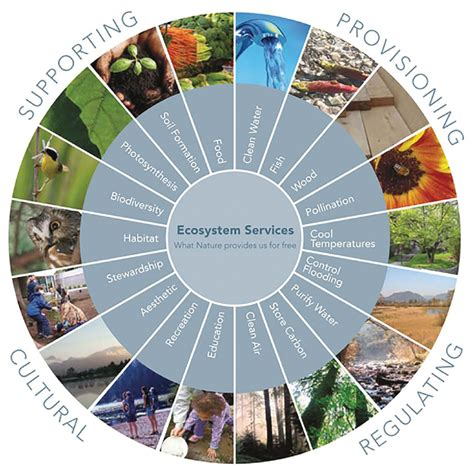
Figure 1.
The Real Issue: Trade-Offs (and Who Pays the Cost)
What stood out to me most was the idea of trade-offs. Increasing food production, for example, may reduce hunger in the short term but often degrades water quality, soil health, and biodiversity. These trade-offs are rarely neutral; the environmental costs are frequently borne by poorer or more vulnerable communities. That realization made it clear that environmental issues are not only ecological problems, but moral and political ones.
Why Ecosystem Degradation Is a “Wicked Problem”
Buchanan’s concept of “wicked problems” helped explain why these trade-offs are so difficult to manage. Wicked problems, he argues, do not have clear definitions or final solutions.² They depend heavily on who is framing the issue and what values are prioritized. Ecosystem degradation fits this description perfectly. Farmers, corporations, conservationists, and policymakers may all define “the problem” differently — food security, profit margins, biodiversity loss, or climate change mitigation. Because these perspectives conflict, there is no single technical fix.
Design Thinking as Governance
What I appreciated most in Buchanan’s argument is his framing of design thinking as integrative rather than purely technical. Design is not just about creating objects; it connects signs, things, actions, and systems.³ In the context of sustainability, this suggests that environmental governance is a form of design — it involves intentional planning under uncertainty, balancing competing values, and adapting over time. The Millennium Assessment reinforces this idea by showing that ecosystem management must account for complex feedback loops and unintended consequences.
Takeaway: Better or Worse Pathways, Not Final Solutions
Together, the readings suggest that sustainability is not about solving problems once and for all. It is about ongoing decision-making, compromise, and adaptive management. That perspective is both realistic and unsettling. It means there is no final “solution” to environmental degradation — only better or worse pathways forward.
Question I’m Left With
If environmental sustainability is a wicked problem, how should governments balance long-term flexibility with the need for clear responsibility and measurable results?
Policies require accountability and targets, yet wicked problems demand adaptation and revision. Too much rigidity may lock in harmful approaches; too much flexibility may weaken enforcement. Understanding how to navigate that tension seems essential for designing sustainability policies that are both effective and equitable.
Footnotes:
1.Millennium Ecosystem Assessment, Ecosystems and Human Well-Being: Synthesis (Washington, DC: Island Press, 2005).
2.Richard Buchanan, “Wicked Problems in Design Thinking,” Design Issues 8, no. 2 (1992): 15.
3.Buchanan, “Wicked Problems,” 9–10.
Figure 1. Ecosystem services organized into four categories (supporting, provisioning, regulating, and cultural), illustrating how nature supports human life in multiple ways.
Word Count: 523 words
 Enviromental Studies Blog
Leave a comment